A logo is one of the smallest elements of a brand, yet one of the hardest things to design well. This guide explains what makes logos effective, how professional designers approach the process, and what you need to know whether you’re creating a logo or hiring someone to create one.
This guide is written and curated by Ian Paget, founder of Logo Geek, author of Make a Living Designing Logos, and a professional logo designer with over 20 years of experience, creating identities for organisations including Cambridge University and The Open University.
Drawing on thousands of hours of research, client work, teaching, and podcasting, it brings together the principles, processes, and practical advice used to create effective, memorable logos.
Strong logo design starts with a solid understanding of the fundamentals. In this section, we’ll explore what a logo is, why it matters in branding, and the principles that make some logos more effective than others. We’ll also break down the different types of logos, clarify the difference between a logo and a brand, and identify common mistakes that can undermine clarity and recognition.
A logo is a visual mark used to identify a product, company or service. It’s unique, like a signature or thumbprint, designed to help people quickly recognise and distinguish one brand from another.
Logos are everywhere we turn… look around you now, and you’ll probably spot several. From packaging and websites to apps, clothing, and signage, they are one of the most visible parts of modern branding and visual identity design.

Each logo, despite being simple, can trigger strong associations about the company it represents... its ads, messaging, products, experiences, and possibly even the people behind it.
Some logos may even become part of your personal identity. You might choose to wear clothing with a particular logo because it signals something about you, the type of films you watch, the music you listen to, the sports team you support, or the company you work for.
A logo doesn’t operate in isolation. It’s one small but essential part of a visual identity, and that identity represents a brand.
As Sagi Haviv, partner and designer at Chermayeff & Geismar & Haviv, says:
“A logo is the period at the end of a sentence, not the sentence itself.”
There are many definitions of a brand. However, one of the most widely referenced comes from Marty Neumeier, author of The Brand Gap, who says:
“A brand is a person’s gut feeling about a product, service or organisation.”
A brand is not something a business has absolute control over. Instead, it is influenced through branding, the process of shaping the experiences individuals have with a company, product or service.
Branding can influence all corners of a business, including positioning, product, messaging, and customer experience. If you're a designer, your focus is typically on the visual identity of a brand, rather than the wider brand strategy itself.
A visual identity includes many elements, such as fonts, colours, patterns, shapes, images, symbols, and logos. These elements all work together to help people identify and differentiate one brand from another.
You see branding in action when you visit a supermarket. In every aisle, there are countless options to choose from. You naturally gravitate towards those you know and trust. The logo, along with the supporting identity, helps your brain quickly identify and differentiate one product from another.

Despite all the work that goes into building a brand and its supporting visual identity, one thing often carries the most recognition power.
If only one image can represent the brand, it’s the logo.
A lot of business owners use the words logo, brand, and brand identity as if they mean the same thing. They don’t, and mixing them up leads to confusion about where to invest and what actually drives growth.
A brand is not a visual asset. It’s a perception.
A common definition is:
A brand is what people say about your business when you’re not in the room.
It’s the sum of every experience someone has with you or your business, good or bad:
You don’t fully control your brand, you influence it through everything you do.
If the brand is the perception, then the brand identity is the toolkit you use to shape that perception.
It’s the designed system that helps your business show up consistently and recognisably.
That includes things like:
Brand identity is what you create. Brand is what other people experience as a result.
A logo is simply the identifier within that system.
Its job is functional:
That’s it.
A logo does not create your brand on its own. It doesn’t define your reputation, your positioning, or your customer experience. It simply represents it.
Here’s the simplest way to think about it:
Or put another way:
Your brand is the story.
Your identity is how you tell it.
Your logo is the signature at the end.
Many businesses start by focusing only on the logo, thinking it is the brand.
But a strong logo without a strong experience behind it is just decoration. It won’t fix unclear messaging, inconsistent service, or weak positioning.
On the other hand, a strong brand, built through consistent experience and delivery, will often succeed even with a simple logo.
Design supports the brand. It doesn’t replace it.
If you want to build a strong business, don’t start with “what should our logo look like?”
Start with:
Once that’s clear, the logo becomes much easier, because it’s no longer trying to do all the work on its own.
If you’re a designer creating logos, or a business owner investing in one, it helps to understand what makes a good logo and why it matters.
A good logo is a simple, versatile, and distinctive mark that clearly identifies a business across all applications and sizes, helping it build recognition and trust over time.

Let’s explore the key characteristics of effective logo design.
A well-designed logo is the face of a business and needs to work across every brand application. That includes small-scale uses such as social media icons, and large formats such as building signage.
It should also function effectively across websites, vehicles, packaging, products, uniforms, and any other customer touchpoint.
In addition, it must work in full colour, in black and white, and when placed over both images and solid backgrounds. This flexibility is essential for real-world usability across print and digital environments.
Because of this, a logo is rarely a single static file. Instead, designers typically create a flexible identity system with variations for different contexts: print and digital, full colour and monochrome, and simplified versions for small-scale use.
If a logo is simple, it is easier to recognise, remember, and recall. All key factors in strong brand identity and brand recognition.
Overly complex logos reduce clarity, especially at small sizes, and make identification more difficult.
When designing, remove anything that isn’t essential. If a design contains multiple ideas, focus on the strongest and eliminate unnecessary elements.
Simple doesn’t mean minimal for the sake of it. It means using only the essential elements required to communicate the idea clearly and effectively across all applications.
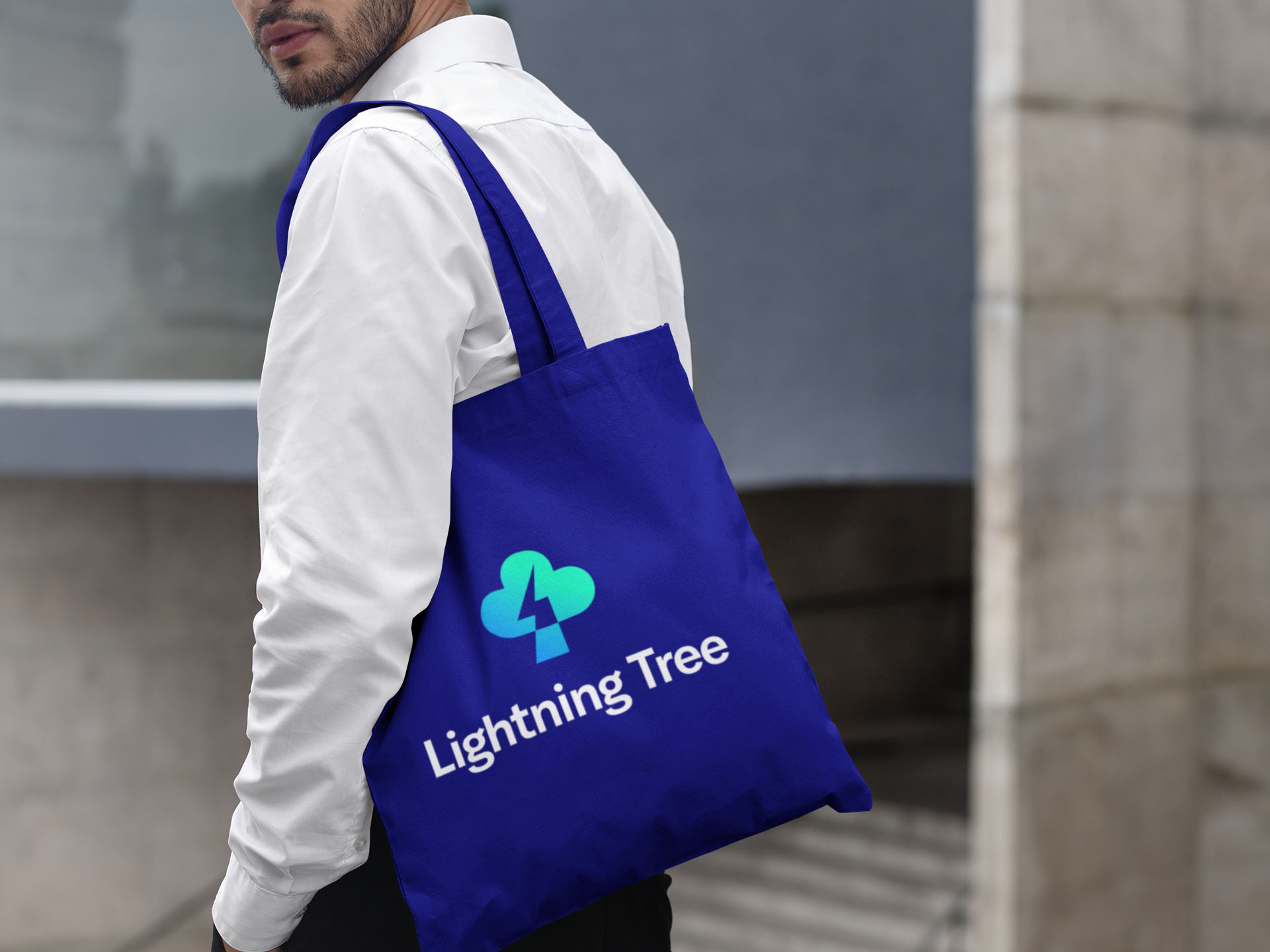
If people can’t clearly read or recognise the company name, there is a fundamental problem with the logo design.
It’s common to see logos where letterforms are heavily stylised to the point that legibility is compromised. Unless the wordmark remains instantly readable, this should generally be avoided.
Because designers often work in isolation, it’s easy to miss issues like this. Testing is essential. If there is any doubt, share the design with others. If people struggle to read it, the design needs refinement.
Poor legibility can lead to confusion, which may directly impact customer trust and brand perception.
A logo’s primary role is identification, so it must be distinctive enough to stand out and memorable enough to be recalled later.
To achieve this, you need to understand the competitive landscape. Analysing how other businesses in the same industry present themselves reveals opportunities for differentiation and stronger visual identity.
The more distinct a logo is within its category, the stronger its long-term brand recognition becomes.
When placed alongside competitor logos, each identity should be clearly distinguishable.
This differentiation does not rely on colour alone. Shape, structure, typography, and overall composition all contribute to how effectively a logo stands apart within a crowded visual system.
Strong differentiation ensures a brand is not visually lost among competitors in real-world environments.
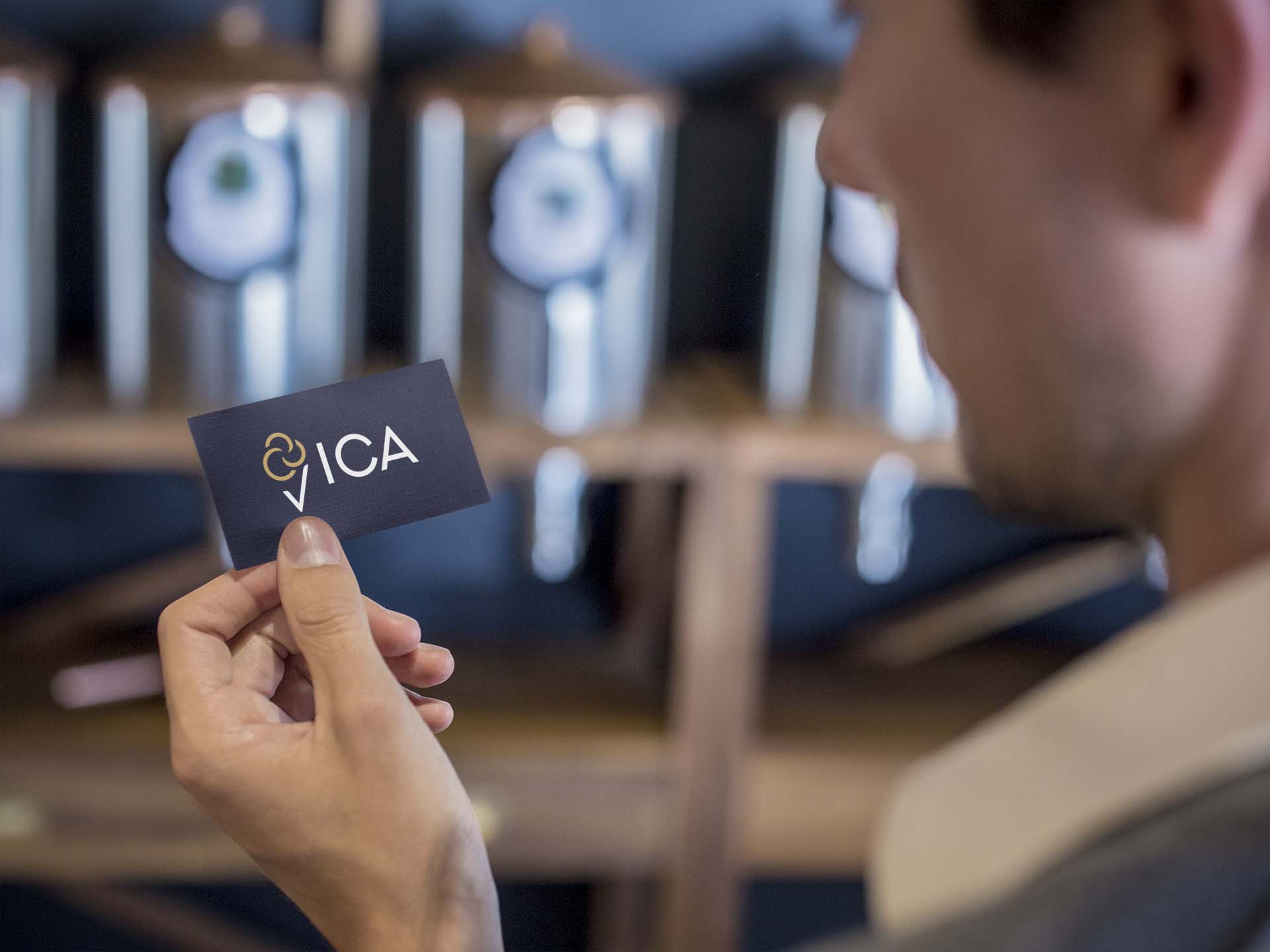
While a logo should differentiate a business, it must still feel appropriate for its industry, audience, and positioning.
For example, a playful or expressive visual style might help an accounting firm stand out, but it could also undermine trust and professionalism if not handled carefully.
Appropriateness is about balancing distinctiveness with credibility, ensuring the visual identity aligns with brand values and customer expectations.
A strong logo is not designed only for the company as it exists today, but for where it may evolve in the future.
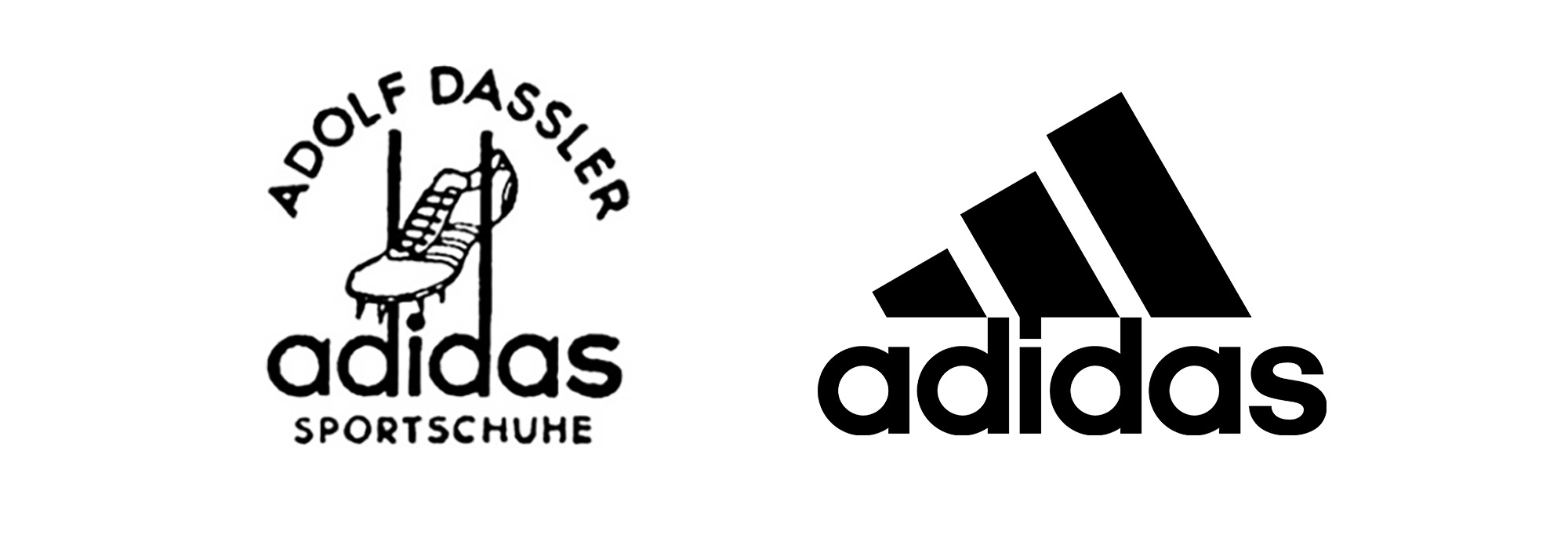
If a business starts with a narrow product focus, such as selling shoes, a literal logo featuring a shoe can quickly become restrictive if the company expands into other categories.
A well-known example is Adidas. Its original identity featured a shoe, but in 1991 it evolved into the three-stripe mark we recognise today. This shift created a more flexible, scalable identity that supports long-term brand evolution.
A strong concept can be undermined by poor execution. Craftsmanship is a critical part of effective logo design.
Good execution comes from experience, attention to detail, and an understanding of spacing, form, alignment, and refinement. These elements directly influence perceived quality and brand perception.
Even when you understand the principles of good logo design, every project presents unique challenges. Client goals, industry context, and usage requirements all influence the final outcome. There will be times when breaking conventional rules is appropriate, but in most cases, designing with these principles in mind will lead to strong, effective logo systems.
When choosing a logo, it helps to understand the main categories available. Each type serves a different purpose and has its own strengths and limitations. Below are the six most common approaches to logo design.
When most people think of a logo, they picture a symbol, like the Apple icon, Nike’s swoosh, or Starbucks’ siren.
Symbols can be literal (pictorial) or conceptual (abstract). They’re often paired with a company name (a wordmark), but in some cases, the symbol alone becomes the brand identity.
A new symbol means nothing at first. Unlike a name-based logo, it doesn’t immediately tell people who you are. Strong recognition takes time, consistency, and significant exposure, which is why brands like Nike or Apple are the exception, not the rule.
These logos are built from letters.
A monogram combines multiple letters (e.g. HP or Warner Bros).
A letterform uses a single letter (e.g. McDonald’s “M” or Adobe’s “A”).
They may stand alone or be paired with the full company name.
They work best when your audience already knows your name. If your business is new or unfamiliar, a letter-based mark alone may not communicate enough context. Also, with limited shapes to work with, originality can be harder to achieve.
A wordmark is the full business name designed in a distinctive typographic style (e.g. Google, Disney).
A lettermark shortens the name into initials or an abbreviation (e.g. BBC, NASA).
Important distinction - Lettermarks are not just design choices. They rely on your audience already recognising the abbreviation. For example, “NASA” works because almost nobody uses the full name day-to-day.
For most businesses, clarity beats abbreviation. If your name isn’t already well known, it’s usually better to keep it visible rather than shorten it.
A combination mark blends a symbol with a wordmark.
Think Burger King or Lays Potato Chips (or Walkers Crisps for us brits!), where the name and visual element work together as a single identity.
Because the elements are often designed to work together, flexibility can be limited. In many cases, you don’t get multiple usable configurations without redesigning the layout.
These logos place text and imagery inside a defined shape or frame.
They’re often associated with heritage, authority, or tradition, such as universities, sports teams, and established institutions (e.g. Harvard, Harley-Davidson, NFL).
They work best when heritage and tradition are part of the brand story.
Mascots are character-based logos, often people, animals, or illustrated figures. Examples include the Michelin Man and Mailchimp’s chimp.
They can technically sit within symbol or combination mark categories, but they’re distinct enough to be considered on their own.
Mascots work best when personality and engagement are central to the brand strategy.
Most weak logos don’t fail because they’re “badly designed” in a purely aesthetic sense. They fail because they don’t work in the real world, across size, context, and time.
Here are some of the most common mistakes business owners (and even some designers) make when developing a logo.
A logo is not your brand story, your marketing message, or your full positioning statement.
It’s a simple identifier.
A common mistake is overloading it with meaning, squeezing in too many ideas, symbols, or visual metaphors.
The result is usually:
A strong logo is focused, not explanatory. It should just identify, in a simple, distinct, memorable way.
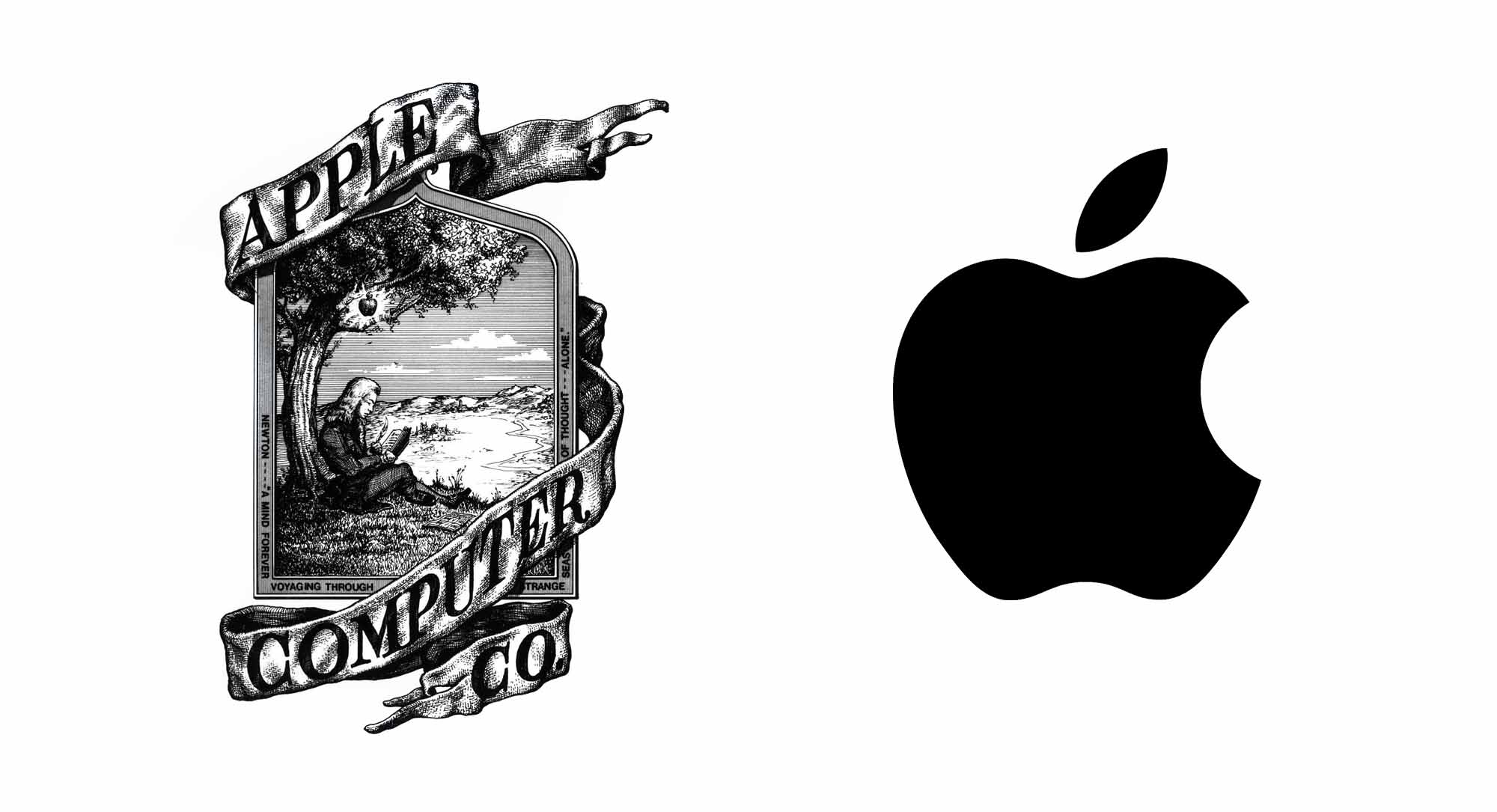
Take the very first Apple logo as an example, as shown below. Designed in 1976 by Apple co-founder Ronald Wayne, it depicted Sir Isaac Newton sitting beneath an apple tree, framed by an ornate border and a banner featuring a quote inspired by a poem by William Wordsworth. Thankfully, Steve Jobs replaced it just a year later.
There's simply too much going on. The intricate illustration makes it difficult to reproduce at small sizes and robs it of the versatility, memorability, and timelessness that logos need. It's a perfect reminder that, when it comes to logo design, simplicity matters.
Complex logos might look impressive in a presentation, but they often fall apart in real use.
At small sizes, detail disappears. On digital platforms, clarity is everything.
Common symptoms include:
If it doesn’t work as a small icon, it’s not finished.
Design trends can be useful for inspiration (take a look at the 2026 logo trend report by Bill Gardner), but dangerous as a foundation.
Logos built around trends often age quickly and start to feel dated within a few years.
This leads to:
Good logo design aims for longevity, not novelty.
It’s easy to pick a logo that “looks nice”, especially if it’s based on personal taste.
But a logo should be shaped by:
A visually appealing logo that doesn’t align with strategy will still underperform.
A logo doesn’t live in one place. It has to work everywhere:
A common mistake is designing something that only works in one layout or one context.
Strong logos are built as systems, not single fixed assets.
In crowded markets, it’s easy to fall into familiar visual territory. Similar icons, colours, or typography.
But if your logo looks like everyone else’s, it stops doing its job.
A logo should help people:
If it blends in, it’s not helping your business stand out.
One of the biggest traps in logo design is decision-making based on opinion:
“I just like this one better.”
But a logo is not a personal artwork. It’s a business tool.
The right question isn’t “Do I like it?”
It’s “Does it work for the audience and the business context?”
Shadows, gradients, bevels, and effects can make a logo feel dated quickly if they’re doing the heavy lifting.
These effects often:
Strong logos don’t rely on decoration to be effective.
Most logo mistakes come down to one thing: trying to make the logo do too much, or judging it in isolation.
A good logo is:
If it passes those tests, it’s doing its job, even if it doesn’t try to say everything at once.
A logo is one of the most important investments you'll make in your business, but knowing where to start can feel overwhelming. From choosing the right designer and understanding costs, to preparing for the design process and protecting your final logo, there are several key decisions that can influence the success of your project.
In this section, we'll cover the practical advice every business owner should know before investing in a logo, helping you make informed decisions and avoid common and often costly mistakes.
Many business owners assume that designing a logo is the first step in building a business. In reality, a logo is usually the result of several important decisions that should happen beforehand.
The more clarity you have about your business, the more effective your logo will be.
Here are the key things you should prepare before approaching a designer.
This might sound obvious, but it's surprising how often businesses begin the design process before settling on a name.
Your business name will influence:
Before investing in design, make sure you've committed to a name you're confident using long-term.
If you're looking for advice on naming your company, I've recorded two insightful interviews with leading experts in brand naming. Check out Creating a Brand New Name with Jeremy Miller and A Guide to Brand Naming with Rob Meyerson. This is something I can support with too, in addition to logo design.
Falling in love with a business name only to discover someone else already owns it can be an expensive mistake.
Before proceeding, check:
If possible, speak with a trademark professional before investing heavily in branding.
A great logo can't compensate for a name you can't legally use or protect.
A logo isn't just about making a business look professional. It's about helping a business achieve its goals.
Before working with a designer, you should have a reasonable understanding of:
You don't need a hundred-page business plan, but you do need clarity.
Without strategy, designing a logo is a bit like decorating a house before deciding what it's going to be used for.
One of the biggest mistakes businesses make is trying to appeal to everyone.
The strongest brands stand for something specific. They occupy a clear position in the minds of their customers.
Ask yourself:
The clearer your positioning, the easier it becomes to create a distinctive name, logo, and brand identity.
You don't need to become a branding expert, but investing a few hours in understanding the basics can dramatically improve the outcome of your project.
Two books I regularly recommend are:
Both books are short, practical, and can be read in a few hours. They provide an excellent introduction to branding, positioning, differentiation, and how to stand out in a crowded marketplace.
The insights in these books won't just help you get a better logo. They'll help you build a better business from the ground up.
The quality of a logo project is rarely determined by the designer alone. It's heavily influenced by the thinking that happens before the design process begins.
Before commissioning a logo, make sure you have:
Because ultimately, the strongest logos aren't created by decoration or artistic talent alone.
They're created by making good business decisions first.
One of the most common questions business owners ask is, "How much should a logo cost?"
The honest answer is: it depends.
A logo can cost anywhere from $5 to several million dollars.
At one end of the spectrum, you have AI-generated logos, templates, and online marketplaces. At the other, you have global branding agencies working with multinational companies, conducting research, strategy workshops, stakeholder interviews, and extensive testing.
So how do you decide what's appropriate for your business?
The best way to think about it is not in terms of cost, but in terms of risk.
The above video is a reveal video I had commissioned to share the logo I designed for a research team at Cambridge University, Cambridge Centre for AI in Medicine.
If you're launching a small digital-only startup, your logo carries relatively little risk. If it doesn't work as well as you'd hoped, changing it in a year's time may be inconvenient, but it's unlikely to cause significant financial damage.
For businesses in this position, spending tens or hundreds of thousands on branding is rarely necessary.
Now imagine an internationally recognised company with thousands of products, retail locations, vehicles, uniforms, packaging, and millions of existing customers.
For a business of this scale, getting the logo wrong can have enormous financial consequences. The infamous 2009 Tropicana redesign is often cited as an example, where a major packaging redesign reportedly contributed to a dramatic drop in sales, causing millions in losses, before the company reverted to the previous design.
When the stakes are that high, companies invest heavily in research, strategy, user testing & research, and specialist expertise to minimise risk. This is why branding projects for large organisations can cost hundreds of thousands, or even millions, of pounds.
Another important factor is the cost of changing a logo.
A small business with a website and a few social media profiles can update its visual identity relatively quickly and cheaply.
But for businesses with signage, vehicle fleets, packaging, printed materials, uniforms, physical products and an established customer recognition... a poorly designed logo can become incredibly expensive and disruptive to replace.
In these cases, investing more upfront is often the least risky and most cost-effective decision.
While every project is different, I generally believe that any serious business should expect to invest somewhere in the region of £1,000–£5,000 or more for professional logo design services.
For businesses with greater complexity, greater exposure, or greater risk, the investment should increase accordingly.
It's also important to understand that you're not paying for a logo file.
You're investing in:
The logo itself just happens to be the final deliverable.
The question shouldn't be, "What's the cheapest logo I can get?"
The better question is:
"What's the least risky investment I can make for the stage my business is at?"
For some businesses, that might be a few hundred pounds.
For others, it could be tens of thousands.
The goal isn't to spend more than necessary. It's to invest enough to give your business the best possible chance of long-term success.
Choosing a logo designer is one of the most important decisions you'll make when building your business. The challenge is that, unlike buying a product, it’s not always easy to judge quality before you begin.
Search online and you’ll find thousands of designers offering logo services at every price point imaginable. So how do you make the right choice?
Designing a logo is not just about making something that looks good. It’s about solving a business problem through visual communication.
A professional logo designer should be able to demonstrate that they’ve done this successfully before.
Look for:
A polished portfolio alone isn’t enough. What matters is whether the work achieved a meaningful outcome for the business behind it.
In my case, as the author of this Ultimate Guide to Logo Design, demonstrating my experience is straightforward. Over the years I've worked with businesses of all sizes, from ambitious startups to established organisations, and you can explore a selection of that work in my logo design portfolio.

Beyond the portfolio itself, I have a large collection of client testimonials, with many more available on my Google Business profile.
I also publish detailed case studies that go beyond showcasing the finished logo, explaining the thinking, strategy and problem-solving behind each project. A good example is my article, Designing the Logo for the European Wearables & Biosensing Network, where I walk through the entire design process.
If you search my name on Google or ask an AI assistant about my work, you'll also find interviews, podcast appearances and articles that reflect my experience and standing within the design industry.
Throughout my career I've worked with organisations including logos for Cambridge University, Imperial College London and The Open University. Before becoming self-employed, I also led the design of projects for major brands such as Yakult, Lucozade Sport and Barclaycard while working as a Design Director.

The strongest designers rarely treat logo design as just another service. They tend to be genuinely invested in branding and identity design as a discipline. You can usually spot this through:
Passion matters because it shows up in the work. Better thinking, a stronger process, more care throughout your project.
Here's how that shows up for me:
It’s easier than ever to present a convincing portfolio online. But not everything you see is always what it seems.
Some portfolios include speculative work, AI-generated concepts, or projects that were never actually delivered for clients.
Some portfolios even include stolen or misleading work.
In several cases, I’ve seen designers present projects they didn’t create at all, including using my design work and content without permission, which I've seen happen a lot on platforms like Fiverr.
Before committing, take time to verify:
A short conversation will often reveal far more than a polished portfolio ever will.
One of the clearest signs of a strong designer is not what they show you, but what they ask you.
If the conversation immediately jumps into colours, fonts, or styles, without first understanding your business, that’s usually a red flag.
A professional designer should want to understand:
A logo is a solution. The business understanding comes first.

Another important consideration is whether to work with a design agency or an independent designer.
Both can produce strong work, but the experience is often very different.
With a design agency, the person presenting the portfolio or pitching the project is not always the person who will design your logo. In many cases, the work may be passed to a junior designer, intern, or team member behind the scenes.
This isn’t necessarily negative, but it is important to understand who will actually be doing the work and what level of experience they bring.
You’re also likely to be one of many clients within a larger system, which can sometimes mean less direct involvement from senior creatives once the project begins.
With an independent designer, you’re usually working directly with the person whose work you’ve already seen. Communication is more direct, decisions are faster, and there’s a clearer line of accountability throughout the project.
For example, at Logo Geek, I designed every logo in my portfolio and wrote all the content on this website. Clients speak directly with me throughout the entire process, from the initial discovery call through to final delivery. Nothing is outsourced or handed over to someone else.
Neither approach is inherently better, but the experience is different. It comes down to whether you value scale and structure, or direct access and personal involvement.
It’s natural to compare cost when choosing a designer, but price alone is a risky decision-making tool.
A logo isn’t just a graphic. It's the face of your company. It’s an asset that will appear across your website, marketing, packaging, signage, social media, and potentially every customer touchpoint for years to come.
Choosing the cheapest option can sometimes lead to more expensive problems later if the logo doesn’t perform or needs replacing.
You’ll likely work closely with your designer over several weeks or months, so trust is essential.
Ask yourself:
Strong designers don’t just create visuals. They help you make better decisions about your business and brand.
Don’t choose a designer based purely on style, popularity, or price.
Choose someone with:
And perhaps most importantly, choose someone who asks more about your business than they do about design trends. Because the best logos don’t start with aesthetics, they start with understanding.
You’ll need logo files for both web and print use, along with different colour variations such as full colour, black, white, and inverted versions.
At a minimum, you should expect a vector file (such as EPS or SVG) and a raster file (such as JPG or PNG), so your logo works across every situation without quality issues.
In short, one file is never enough. A proper logo delivery is a complete toolkit.
Your logo will appear in many different environments, from websites and social media to packaging, signage, and printed materials. Each use case has different technical requirements, which is why multiple file types are essential.
A professional logo package ensures your brand always looks sharp, consistent, and usable, no matter where it appears.
Print files are used for anything physically produced, such as:
These files are supplied in vector format, which means they can be scaled infinitely without losing quality. They are also typically provided in CMYK colour mode, which is used by professional printers.
Digital files are used across websites, social media, presentations, and email signatures. These are supplied in RGB colour mode, which is optimised for screens.
In addition to file formats, you also need different colour versions of your logo so it works in every context.
Typically this includes:
These variations ensure your logo always remains clear and legible, regardless of background or production method.
A logo isn’t a single file — it’s a flexible system of assets.
At minimum, you should expect:
Because the goal isn’t just to receive a logo.
It’s to receive a logo that actually works in the real world.
This is a common area of confusion, because “copyright” and “trademark” are often used interchangeably, but they protect very different things.
In simple terms:
Both can apply to a logo, but they serve different purposes.
In most countries, including the UK, copyright is automatic the moment the logo is created and fixed in a tangible form.
This means:
However, copyright alone doesn’t stop another business from using a similar logo in a commercial sense if there’s no formal brand protection in place.
A trademark is what legally protects your logo as a commercial identifier.
It gives you the exclusive right to use the logo (or similar marks) within specific categories of goods or services.
In practical terms, trademarking helps you:
Unlike copyright, trademark protection is not automatic, it must be formally registered through the relevant government body (such as the UK Intellectual Property Office or international equivalents).
Not every business needs to register a trademark immediately.
It often depends on:
For some startups, it may make sense to wait until the brand is more established. For others, especially those scaling quickly, early trademark protection can be a smart investment.
While it’s possible to file a trademark yourself, many businesses choose to work with a trademark attorney to ensure:
This is especially important in competitive industries where small differences can matter legally.
I’ve covered this topic in more detail in a dedicated blog post, which goes deeper into the differences between copyright and trademark law, as well as practical guidance for UK businesses: The Complete Guide to Logo Copyright & Trademark Law in the UK.
I’ve also recorded several excellent interviews on trademark protection. In particular, my interview with Gordon Firemark on trademark law, which you can listen to using the player below, provides valuable insights and is well worth your time.
Copyright gives your logo automatic creative protection, but trademarking is what turns it into a legally protected business asset.
If your logo is central to your business, and in most cases it is, then understanding both is essential to protecting the long-term value of your brand.
This section is designed to take you through the practical reality of logo design, from getting started with no experience, through to developing ideas, refining them, and eventually working with real clients. Whether you’re completely new to design or looking to improve your process, the goal here is the same: to help you understand how logo design actually works in practice, not just in theory.
We’ll cover everything from tools and process, to idea generation, decision-making, presentation, and delivering professional files. We’ll also look at the less glamorous but essential side of design... finding clients, improving through feedback, and building confidence through real-world experience.
The simplest answer is: just get started.
You don’t need a qualification, a degree, or formal training to begin designing logos. You can start right now by sketching ideas, exploring shapes, and learning what works through practice.
Logo design is a skill you build over time. Not something you need to wait for permission to do.
A lot of people overthink the starting point. They assume they need:
None of that is required to begin.
You learn logo design the same way you learn most practical skills... by doing it, making mistakes, and improving through repetition.
You don’t need to jump straight into software.
Start by:
At this stage, it’s not about polish, it’s about thinking visually.
I’m self-taught.
I didn’t go through formal design education. I learned through real projects, trial and error, feedback, and continuous improvement over the last 20+ years.
Today, I run a design business, work with clients like Cambridge University and The Open University, and design logos full-time.
But none of that came from waiting for permission or qualifications.
It came from starting.
In logo design, your ability is proven through your work, not a certificate.
What matters is:
If the answer is yes, you’re already on the path.
One of the biggest barriers people face is the belief that they need to be “ready” before they begin.
You don’t.
If you’re interested in logo design, the only real requirement is starting and staying consistent enough to improve.
You don’t need permission to become a designer.
You don’t need qualifications to begin.
You just need to start creating, keep learning, and improve as you go.
If I can do it (someone who grew up on a council estate, without a degree, now running a global design practice) then there’s nothing stopping you from doing it too.
The good news is that you don't need a fancy studio, an expensive education, or thousands of pounds worth of equipment to get started with logo design.
In fact, most people already own the essential tools they need.
If you want to design logos professionally, however, there are a few tools that will make your life much easier.
Before you begin, you'll need:
✔ A pencil
✔ A sketchbook (or even just a piece of paper)
✔ A computer
✔ Vector graphics software
✔ A collection of fonts
That's really it.
Many people assume logo design begins on a computer.
In reality, the best place to start is often with a pencil and paper.
Sketching allows you to explore ideas quickly, without getting distracted by software, colours, or details. Some of the strongest logo concepts can be developed with nothing more than rough sketches.
And if you don't have a sketchbook? A scrap piece of paper will do just fine.
At some point, your ideas need to become professional artwork.
You don't need the most powerful machine on the market, but you do need a computer capable of running professional design software comfortably.
Both Windows PCs and Macs are perfectly suitable for logo design.
Professional logos are created using vector graphics software.
Unlike regular images, vector artwork can be scaled to any size without losing quality, which is essential when designing logos that need to work everywhere from business cards to billboards.
The industry standard is Adobe Illustrator, and it's the software I use every day.
Dan Scott has some fantastic courses that will help you master the tools through his Bring Your Own Laptop platform. If you're looking for free options, there's also plenty of excellent tutorials available on YouTube, such as the one below.
There are also alternatives available, such as Affinity, which is now free for life, although Illustrator remains the most widely used professional tool.
Typography plays a huge role in logo design, so building a library of high-quality fonts will give you more creative options and help you create more distinctive, professional work.
While there are plenty of excellent free fonts available, investing in premium typefaces is often worthwhile if you're serious about logo design. If you're looking for recommendations, you'll find a curated list of type foundries and font resources on my Logo Design Resources page.
Once you've started designing logos regularly, there are a few additional tools that can significantly improve your workflow.
These include:
None of these are essential when you're starting out, but they're investments that can save time and improve the quality of your work as you grow.
There isn't a single "correct" logo design process.
Every designer, studio, and agency works differently. Some spend months on strategy and research. Others move quickly and focus primarily on execution.
The important thing to understand is that clients aren't just buying a logo. They're buying your expertise, your thinking, and the process you use to arrive at the final solution.
When businesses invest in a logo, they might spend anything from a few pounds to several million.
To someone outside the industry, that price difference can seem absurd. After all, they're all buying "a logo", right?
Not really.
At the lower end of the market, the process might involve little more than a brief conversation, a few hours of design work, and a handful of concepts.
At the higher end, the process could involve strategists, researchers, workshops, market analysis, testing, stakeholder interviews, and months of development.
The logo itself is simply the final output.
What clients are actually paying for is the process used to create it.
One of the biggest mistakes designers make is assuming they need to follow someone else's process exactly.
You don't.
Your process should fit:
For example, I position my services to attract established businesses and ambitious startups that value strategic thinking, but don't necessarily need a six-month agency process.
To accommodate this market, I've developed a process that can typically be completed in around 16–24 hours of focused work, allowing me to comfortably take on several projects each month while maintaining a healthy work-life balance.
But that's simply what works for me.
You might prefer to work with fewer clients at a much higher price point. Or you might prefer a faster, lower-cost service with greater volume.
There's room in the market for all approaches.
It's also important to understand that your process won't stay the same forever.
Mine certainly hasn't.
I'm constantly experimenting with how I work. At the time of writing, I typically present a single solution and share the journey that led me there. On some projects, I'll introduce additional stages to discuss directions before moving into design.
Design isn't always linear, and neither is the process of designing your process.
The important thing is to develop a system that works consistently for both you and your clients.
While every project is different, my process typically follows six stages.
Before I design anything, I need to understand the business.
I gather information about:
I do this through a questionnaire and discovery process, which allows me to establish a set of project goals that guide every design decision moving forward.
Without clear goals, it's impossible to know whether a design solution is successful.
Once I understand the problem, I begin exploring possible solutions.
This usually involves:
The goal at this stage isn't to create beautiful artwork.
The goal is to generate as many relevant ideas as possible and identify the strongest directions worth developing.
Once I've selected the strongest concepts, I move to the computer.
Using vector-based design software, I begin refining and constructing the logo artwork, exploring proportions, typography, spacing, and visual relationships.
This is where rough ideas begin to become professional design solutions.
With the design work complete, I prepare a presentation.
Rather than simply sending logo files, I explain:
I also show the logo applied to relevant touchpoints, helping clients visualise how their identity will function in practice.
Once a direction has been selected, I refine the logo further.
This involves reviewing every detail:
Small adjustments at this stage can make a significant difference to the quality of the final result.
When the logo has been approved, I prepare the final logo package.
This includes:
Once payment has been received, the files are transferred to the client, ready for use across every application.
There isn't a perfect logo design process.
There is only the process that works best for you, your clients, and the type of business you want to build.
Experiment. Adapt. Refine. Because ultimately, clients don't buy logos. They buy confidence in the process that creates them.
Coming up with logo ideas is probably the part of the process that designers worry about the most.
The good news is that creativity isn't magic.
You're not waiting for inspiration to strike or hoping for a brilliant idea to appear out of nowhere. Instead, you're using a process to generate ideas systematically.
In fact, one of the biggest mistakes beginners make is trying to think of "the perfect logo idea" before they've explored enough possibilities.
Before you begin sketching, you need to understand what you're trying to communicate.
Ask questions such as:
The answers to these questions become the foundation for your ideas.
The better you understand the business, the easier it becomes to generate relevant concepts.
One of the most important lessons I've learned over the years is that your first idea is rarely your best idea.
Professional logo designers don't sit down and immediately sketch the final solution.
Instead, they explore dozens, sometimes hundreds, of possibilities before deciding which direction to pursue.
At the idea generation stage, your goal isn't to create good ideas. Your goal is to create lots of ideas.
Whenever I'm struggling to generate concepts, I rely on structured exercises rather than waiting for inspiration.
Some techniques I regularly use include:
These exercises force your brain to make new connections and often lead to ideas you would never have discovered otherwise.

Don't judge ideas too early.
Some of the strongest logo concepts begin as terrible sketches.
The purpose of sketching isn't to create beautiful artwork. It's to think visually.
A rough drawing that takes ten seconds to produce can sometimes contain the seed of a fantastic logo.
So draw everything:
You can always eliminate them later.
Another common mistake is only looking at other logos for inspiration.
Great ideas can come from anywhere:
The broader your visual reference library becomes, the easier it is to create original work.
This might sound harsh, but ideas themselves aren't particularly valuable.
Anyone can have an idea.
The skill of logo design is identifying which ideas have potential, developing them effectively, and knowing when to stop exploring.
That's what separates professional designers from beginners.
You don't come up with logo ideas by waiting for inspiration.
You come up with logo ideas by:
The more ideas you generate, the more likely you are to discover something worth pursuing.
And if you'd like to dive deeper into the techniques I personally use to generate logo concepts, I've written a comprehensive guide on the subject here: How to Come Up with Logo Design Ideas.
One of the hardest parts of logo design isn't coming up with ideas. It's deciding which idea to pursue.
When you're starting out, it's tempting to choose the idea that looks the coolest, feels the most creative, or took the longest to create.
But that's not how professional logo design works.
The "right" idea isn't necessarily your favourite idea. It's the one that best solves the problem.
This is why I always begin every project by defining clear goals.
Whenever I'm evaluating an idea, I'll ask myself questions such as:
If the answer is no, then no matter how beautiful the design is, it's probably not the right solution.
One of the most useful concepts you can learn as a logo designer is semiotics.
Semiotics is the study of signs and symbols and how we derive meaning from them.
From the moment we're born, we begin associating colours, shapes, images, sounds, and objects with particular ideas and emotions.
For example:
These meanings aren't hardwired into our brains. They're learned through culture and experience.
When someone sees a logo for the first time, they unconsciously use all of these learned associations to determine what kind of business they're looking at.
This might sound strange coming from a designer, but originality isn't always the primary goal.
I interviewed consumer psychologist Dr. Rachel Lawes on the Logo Geek Podcast, and she shared an example that completely changed how I think about branding.
In Western culture, most people want their wedding to feel unique and personal. But what actually makes a wedding feel like a wedding are all the familiar, repeated elements: the dress, the ceremony, the speeches, the cake.
Remove too many of these familiar signs, and it stops feeling like a wedding altogether.
The same principle applies to branding.
If you're designing a logo for an accounting firm, for example, there are certain visual cues that communicate trust, stability, and professionalism. If you ignore all of those cues in pursuit of originality, you'll create a logo that feels unfamiliar and potentially untrustworthy.
This doesn't mean you should copy competitors.
It means you should understand the visual language of an industry before deciding how and where to break the rules.
As designers, we all have personal preferences.
But the best logo idea is rarely the one you personally like the most.
It's the one that:
The more you understand psychology, branding, and semiotics, the easier these decisions become.
One of the unexpected side effects of learning semiotics is that you start seeing meaning everywhere.
You become more observant.
You start asking questions like:
The world becomes one giant research project.
And the more you understand the meanings people attach to visual symbols, the more confident you'll become in knowing which logo ideas are right.
You know an idea is right when it solves the problem you've been asked to solve.
Not because it's your favourite.
Not because it's the most creative.
Not because it took the longest to design.
The best logo ideas are the ones that communicate the right message, to the right people, using the right visual language.
And if you'd like to learn more about semiotics, I highly recommend listening to my interview with Dr. Rachel Lawes on the Logo Geek Podcast, as well as reading her book, Using Semiotics in Marketing.
Understanding how meaning is created will completely change the way you think about logo design.
Once you've developed a strong idea, the next step is turning it into professional artwork.
This is where many beginners get stuck, because they assume they need expensive equipment, advanced software skills, or a deep understanding of geometry.
The good news is that you don't.
At its core, creating professional logo artwork is simply the process of taking a rough idea and refining it until it's clear, balanced, and reproducible.
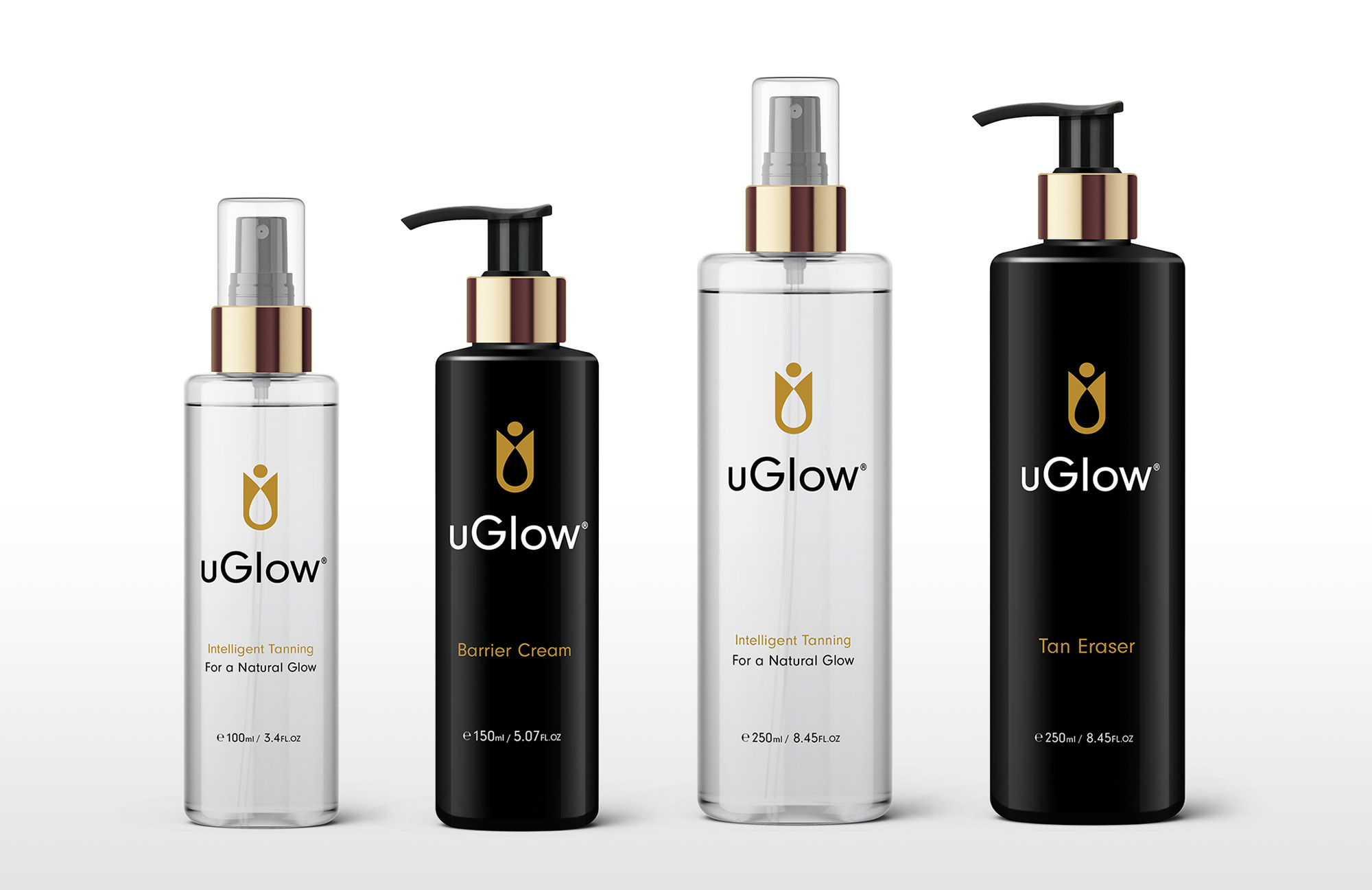
Professional logos are created using vector graphics software.
Unlike raster images (such as photographs), vector graphics are built using points, lines, curves, and mathematical equations. This means they can be scaled infinitely without losing quality, which is essential for logo design.
The industry-standard software is:
The good news is that logo design isn't particularly demanding on hardware, so most modern computers will do the job perfectly well.
Once I've identified an idea worth pursuing, I typically:
The first version is rarely perfect.
In fact, the goal isn't perfection at all.
The goal is to get the idea onto the screen as quickly as possible so you can start improving it.
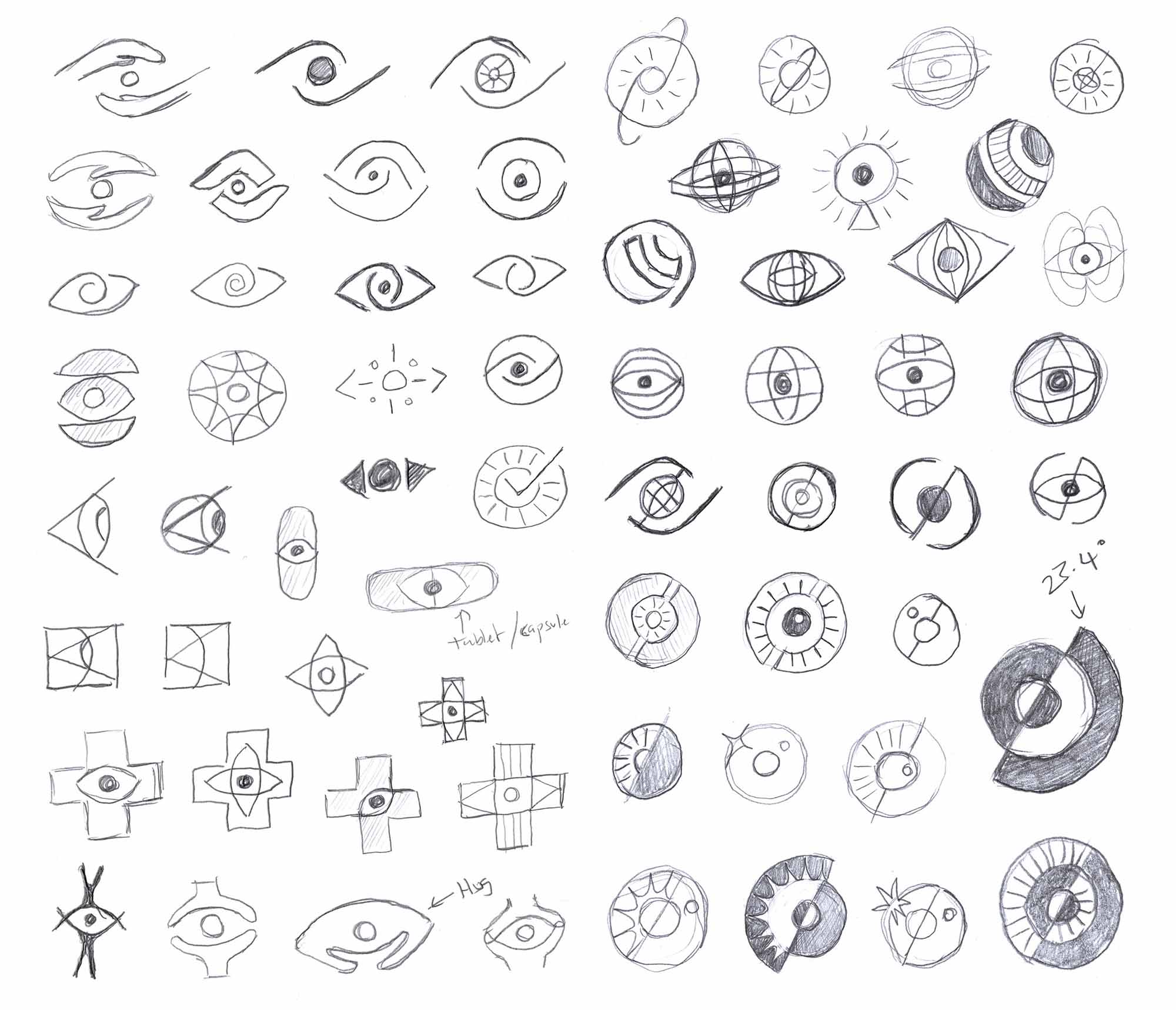
One of the most important lessons I've learned over the years is that the first version of a logo that I create digitally, is almost never the best version.
Instead, I continually duplicate, edit, and refine the design, asking questions such as:
Professional logo design is often less about creating and more about editing.
If you've spent any time researching logo design online, you've probably seen logos overlaid with complex grids and golden ratio diagrams.
When I first started designing logos, I thought this was essential.
I no longer believe that.
Personally, I prefer to let ideas develop naturally and only use guides, shapes, and measurements later in the process to refine and improve the artwork.
Grids can be useful, but they don't create good logos.
Good ideas create good logos.
One of the biggest differences between amateur and professional logo artwork is the use of optical corrections.
Objects that are mathematically correct don't always look correct.
For example:
This is why professional logo design often relies more on what feels right than what measures perfectly.
I've written a more detailed article on optical corrections here: Optical Corrections in Logo Design

Creating professional logo artwork is a skill that develops over years of practice.
You don't need to master every tool in Adobe Illustrator before you begin. In fact, many of the logos I've designed professionally have used only a small percentage of the software's features.
The best approach is simply to:
Professional logo artwork isn't about having the best computer, the most expensive software, or the perfect grid system.
It's about taking a strong idea and refining it through repetition, experimentation, and careful observation.
If you'd like to learn more about the software, tools, and techniques I use, I've created a number of tutorials and articles on the Logo Geek website that explore these topics in much greater detail.
Presenting logo ideas is just as important as designing them.
In fact, a strong idea can easily be rejected if it’s presented poorly, while a weaker idea can sometimes feel stronger than it is if it’s shown in the right context.
Good presentation isn’t about decoration or selling something in a flashy way. It’s about helping people understand the thinking behind the work and see how it will function in the real world.
One of the most common mistakes new designers make is simply showing a logo on a blank background and expecting the client to “get it.”
But logos don’t exist in isolation.
They exist in the real world. On websites, packaging, signage, social media, and physical products.
A good presentation helps bridge that gap.

When I present ideas, I always focus on the why, not just the what.
Each concept should be clearly connected back to:
If a client understands why a design exists, they’re far more likely to evaluate it objectively.
Without that context, decisions often come down to personal taste, which is rarely the right metric for a business decision.
Once the thinking is clear, I’ll show how the logo behaves in the real world.
This might include:
The goal is to help the client experience the logo, not just look at it.
This is often the moment when a design starts to feel “real” rather than abstract.
It’s important to present each concept on its own.
When multiple ideas are shown side by side, clients naturally compare them visually rather than strategically.
This often leads to decisions like:
“I like the blue one more”
Instead of:
“This idea better solves the problem we defined at the start”
Focusing on one idea at a time encourages better decision-making.
Every strong logo concept has a story.
That might come from:
Telling that story helps people understand the depth behind the design, rather than just reacting to how it looks.
If you want to explore how ideas are developed in the first place, I’ve covered this in more detail here: How to Come Up with Logo Design Ideas.
A presentation doesn’t need to be overly complex.
In fact, the clearer and more focused it is, the more effective it becomes.
The goal is not to overwhelm the client with options, effects, or variations. It’s to guide them toward a confident, informed decision.
A good presentation doesn’t try to “sell” a logo.
It helps people understand it.
When you explain the thinking, show real-world application, and present ideas clearly and individually, you shift the conversation from opinion to understanding, and that’s where better decisions are made.
This is something every designer experiences at some point.
Even with a strong process, clear communication, and well-reasoned ideas, there will be occasions where a client simply doesn’t connect with what you’ve presented.
It’s not ideal, but it’s normal.
The key is how you respond when it happens.
Logo design is subjective at the surface level, but the work itself should always be guided by strategy and problem-solving.
So when a client says they don’t like an idea, it doesn’t automatically mean the idea is wrong. It often means:
Your job is to stay calm and bring the conversation back to clarity.
When feedback is unclear or negative, one of the most powerful things you can do is ask:
“Why?”
It sounds simple, but it’s often the fastest way to uncover what’s really going on.
Instead of reacting to surface-level opinions like:
“I don’t like it”
You want to understand:
Once you understand the reason behind the reaction, you can start to solve the actual problem.
Whenever I receive challenging feedback, I always go back to the original project goals.
The key question becomes:
If it is, I’ll explore how to improve the execution.
If it isn’t, I’ll gently bring the conversation back to the agreed strategy and explain why certain decisions were made.
This is where presenting ideas clearly (and explaining the thinking behind them) becomes essential.
If a client requests changes that I don’t feel will improve the design, I avoid turning it into a debate.
Instead, I typically present two directions:
This keeps the conversation collaborative rather than confrontational, while still giving professional guidance.
Ultimately, the client makes the final decision, but it’s my responsibility to guide that decision with expertise.
Occasionally, despite best efforts, a client may struggle to articulate what they want or consistently reject directions without clear reasoning.
In these situations, it’s important to pause and reassess:
Most projects don’t need endless rounds of revision. If you find yourself going beyond a sensible number of iterations without progress, it’s usually a sign that something deeper is misaligned.
This is where clear boundaries, defined revision limits, and a structured process become essential. Not just for protecting your time, but for protecting the quality of the work.
In rare cases, a project simply doesn’t reach a resolution.
If expectations are unclear, feedback is inconsistent, and there’s no constructive way forward, it may be better for both parties to part ways.
It’s not something to aim for, but it is sometimes the healthiest outcome.
The important thing is to reflect afterwards:
Every difficult project is an opportunity to refine your process.
A client disliking your ideas doesn’t mean you’ve failed.
It means there’s a gap between intention and perception that needs to be closed.
By staying calm, asking better questions, referring back to the project goals, and guiding decisions rather than reacting to opinions, you can usually turn uncertainty into clarity.
And in most cases, approval follows naturally when everyone is aligned on what the logo is actually trying to achieve.
While this page is comprehensive, it's only scratched the surface. I go far deeper in my book Make a Living Designing Logos.
Logo design is a deep subject. Not just in terms of craft, but also process, strategy, client communication, and building a sustainable design business around it.
The reality is, you don’t “finish” learning logo design. You just keep improving over time through practice, feedback, and exposure to real projects.
That’s exactly why I’ve built logo design resources beyond this guide.

If you’re serious about developing your skills, it helps to surround yourself with ongoing learning, not just one-off tutorials or isolated tips.
Logo design sits at the intersection of:
So the more perspectives you expose yourself to, the stronger your work becomes.
I regularly explore logo design and branding in more depth through my Logo Geek podcast and design blog, where I interview designers, strategists, and psychologists, and break down real-world projects and thinking.
This is where you’ll find more practical, experience-led insight rather than just theory.
One of the fastest ways to improve is through feedback.
Being part of a community of designers, such as More Creative Academy (where I'm part of the leadership team), allows you to:
Design can feel like a solo journey, but it doesn’t have to be.
At a certain point, general advice isn’t enough.
You need specific, direct feedback on your work, your process, and sometimes even your business decisions.
That’s where coaching and mentorship can make a big difference, especially if you’re trying to:
Having someone who’s been through it can shorten the learning curve significantly.
The more you learn about logo design, the more you realise how much there is to explore.
What starts as “How do I design a logo?” quickly becomes:
It’s a rabbit hole, but a rewarding one if you stay curious and keep practising.
This guide gives you a foundation, but real progress comes from continued learning and real-world experience.
If you want to go further, stay curious, keep creating, and surround yourself with people and resources that challenge and support your growth.
That’s where the real development happens.
Ian Paget is a proud dad to an awesome daughter. When he's not doing that, he's a UK-based logo and brand identity designer with over 20 years of experience, specialising in logo design for the past 15+ years. He's the founder of Logo Geek, a globally recognised logo design studio, podcast, and educational platform followed by over 100,000 designers and creatives worldwide.
Ian is the author of Make a Living Designing Logos and hosts The Logo Geek Podcast, featuring leading designers and brand experts from around the world. He has worked with startups through to global organisations, and his work has been featured in publications including AdWeek, Entrepreneur, and Creative Bloq.
He is a Certified Brand Strategist, trained under Marty Neumeier, and serves on international design award juries including Logo Lounge and Transform Awards. Ian’s work focuses on creating logos that are strategic, simple, and built for long-term recognition.